Transforming Decentralized Hospitality Operations into a Data-Driven Control Tower
A bespoke ERP suite for remote workforce oversight, automated financial settlements, and real-time inventory control — built to manage dozens of venues from one central system.
Project Overview
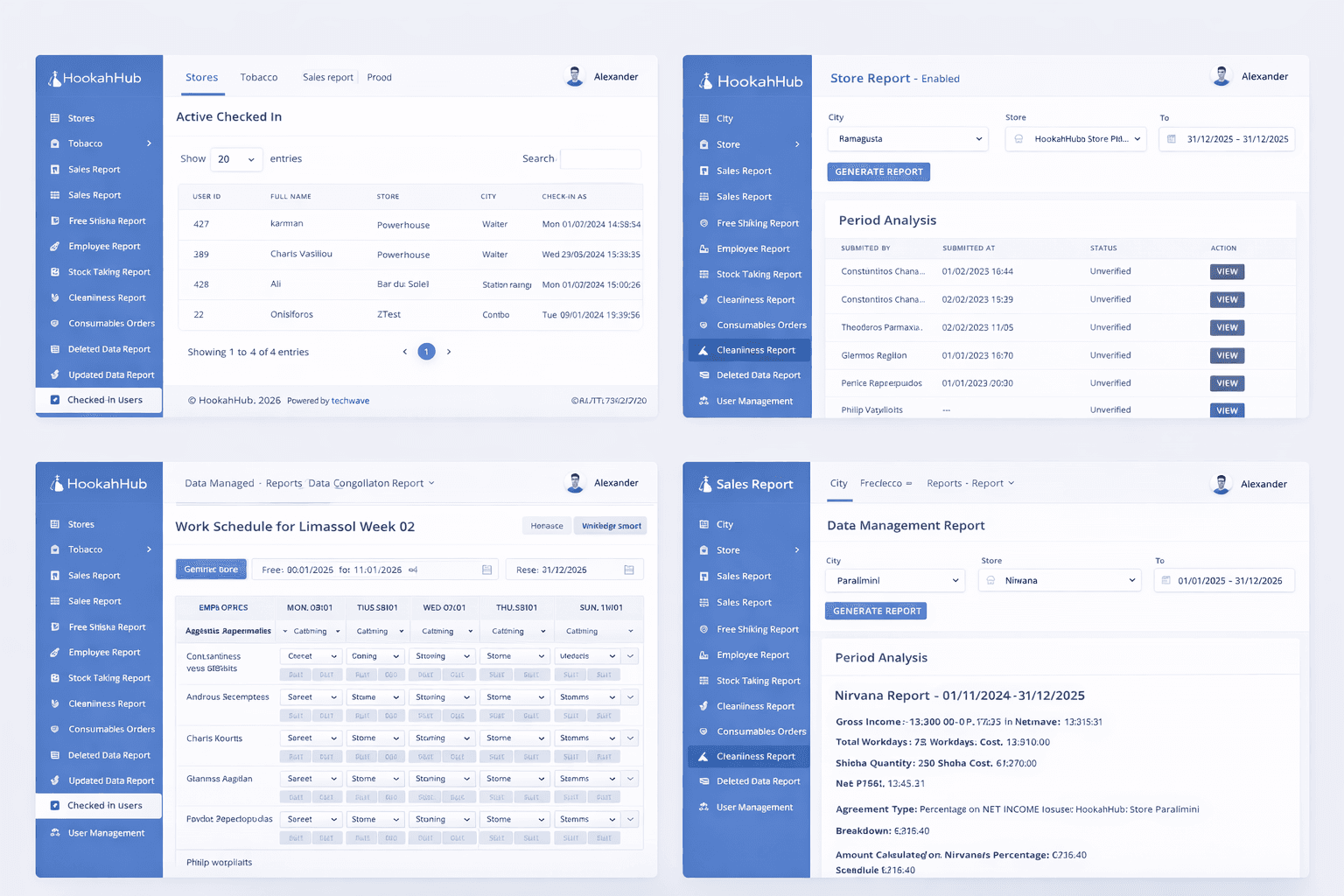
This platform was built for a hospitality service provider operating across a large network of third-party venues (bars and restaurants). Their own staff and managers worked inside partner venues, which meant operations were physically distributed but had to be centrally controlled.
The solution became a single system for: venue setup, manager/staff onboarding, weekly scheduling, geo-validated attendance, overseer-first compliance checklists, automated payroll, monthly profit-sharing settlements, and live inventory via a POS-like ordering flow.
The Challenge: Managing the “Invisible Workforce”
The client’s workforce was spread across many venues, with staff employed by the provider (not by the venue). That separation created a visibility gap: it was difficult to verify attendance, enforce operational discipline, and accurately calculate monthly costs and revenue splits.
At the same time, each venue had a different settlement model and the business needed reporting strong enough to renegotiate underperforming contracts based on real data — not guesswork.
- No reliable way to confirm staff were physically present at the assigned venue
- Manual payroll complexity (hourly vs daily contracts) led to delays and errors
- Profit-share agreements varied per venue and were error-prone to calculate
- Remote inventory shrinkage due to missing real-time stock visibility
- Limited reporting made performance conversations difficult with venues
The Solution: A Unified Operations & Settlement ERP
We designed a full-stack ERP that acts like a control tower: every venue, manager, staff member, schedule, attendance event, order, and settlement is tied together under one tenant-aware workflow.
The entire system was built around enforceable rules: geo-fenced presence, manager-led oversight, and automated month-end calculations so finance becomes consistent and defensible.
1) Geo-fenced Workforce Management (Overseer-First)
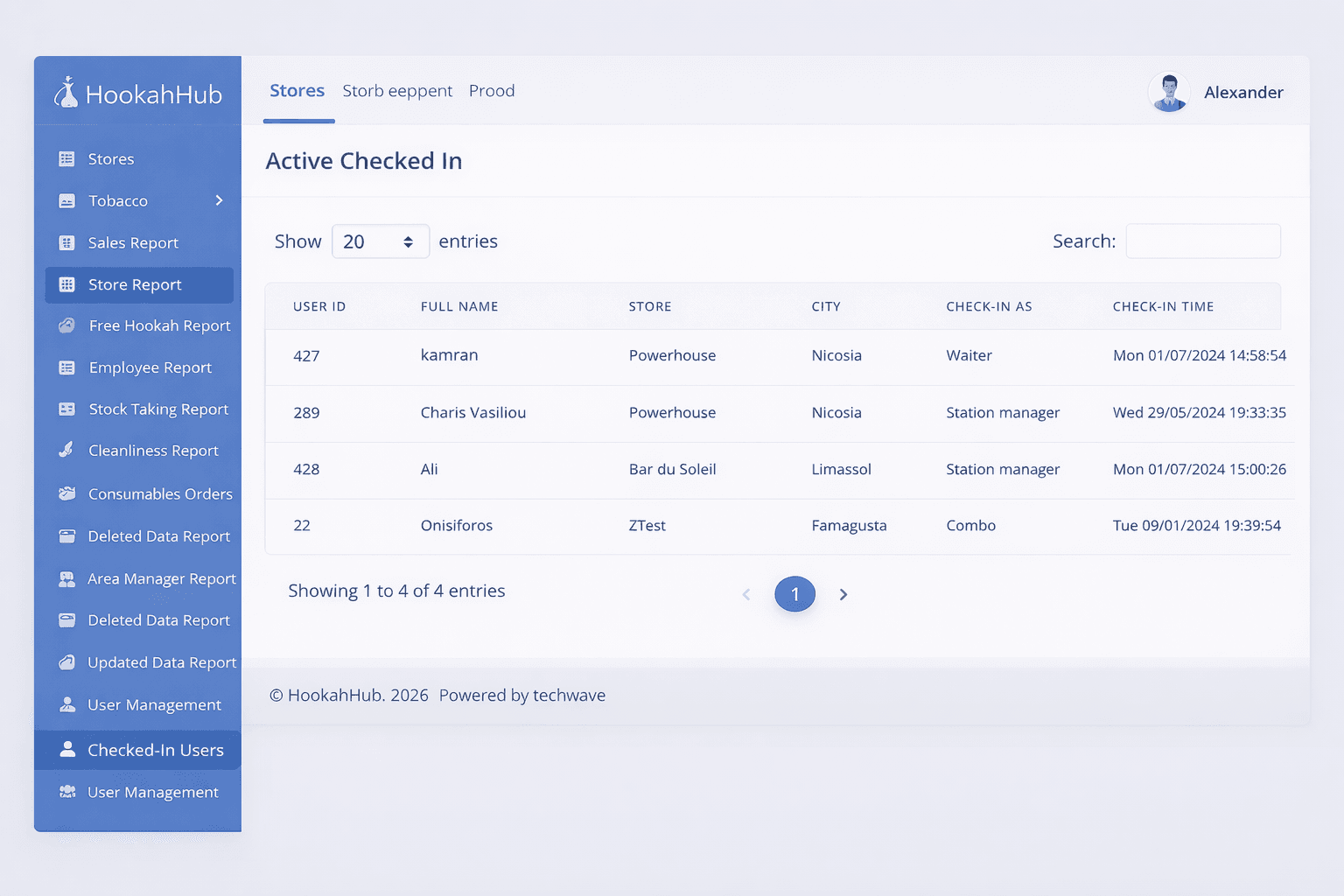
Attendance was redesigned to be provable. Staff can only log in for attendance if they are within a strict radius of their assigned venue’s location for that day.
To prevent unsupervised work, we added an overseer-first flow: the venue manager must log in first, confirming supervision is present and the venue is ready.
- Geo-fenced login within a 100-meter radius of venue coordinates
- Manager must log in first (overseer-first) before staff can check in
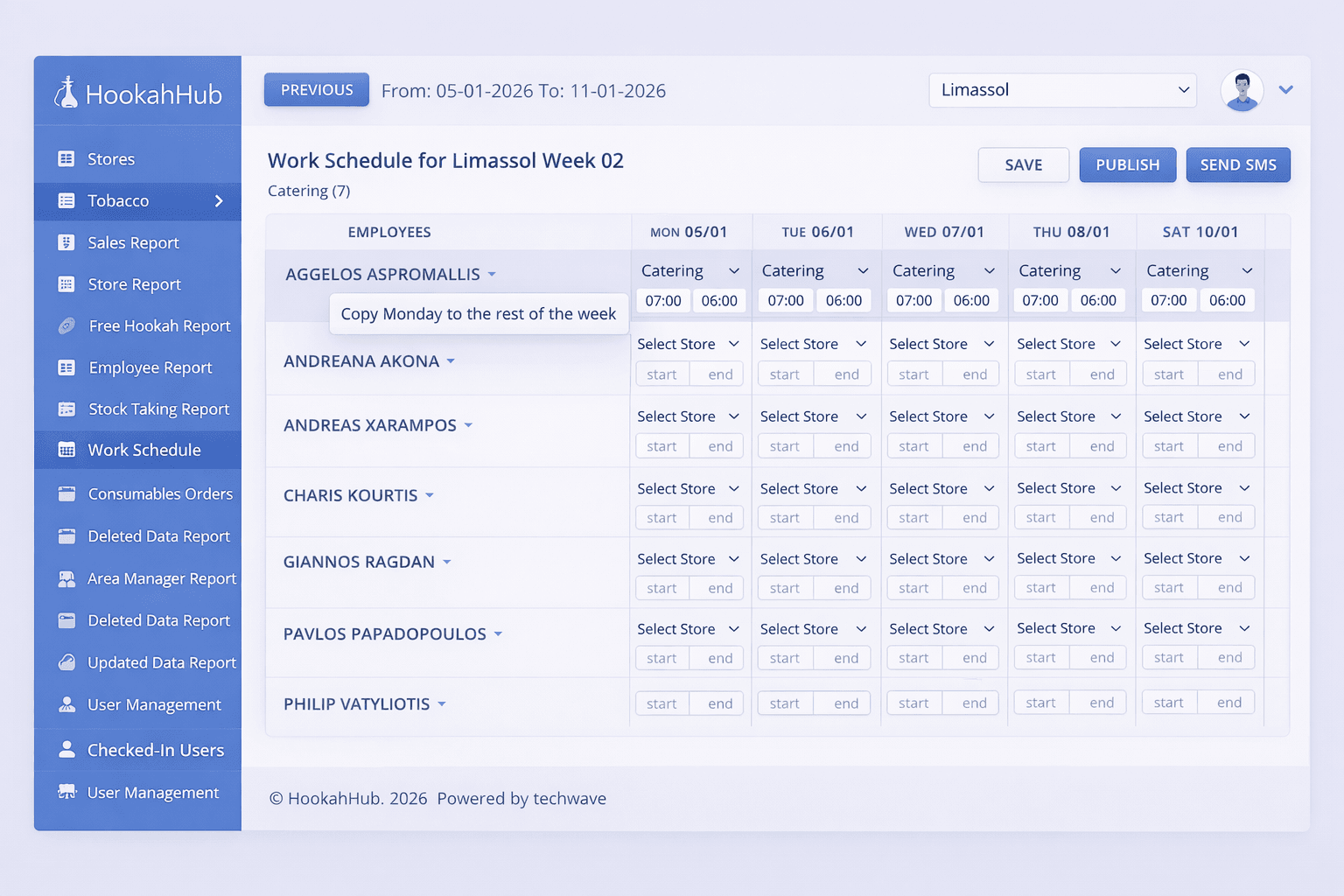
- Weekly schedule planning with copy/paste templates and staff shuffling
- Clock-in / clock-out events calculate total working hours automatically
2) Manager Checklists & Operational Compliance
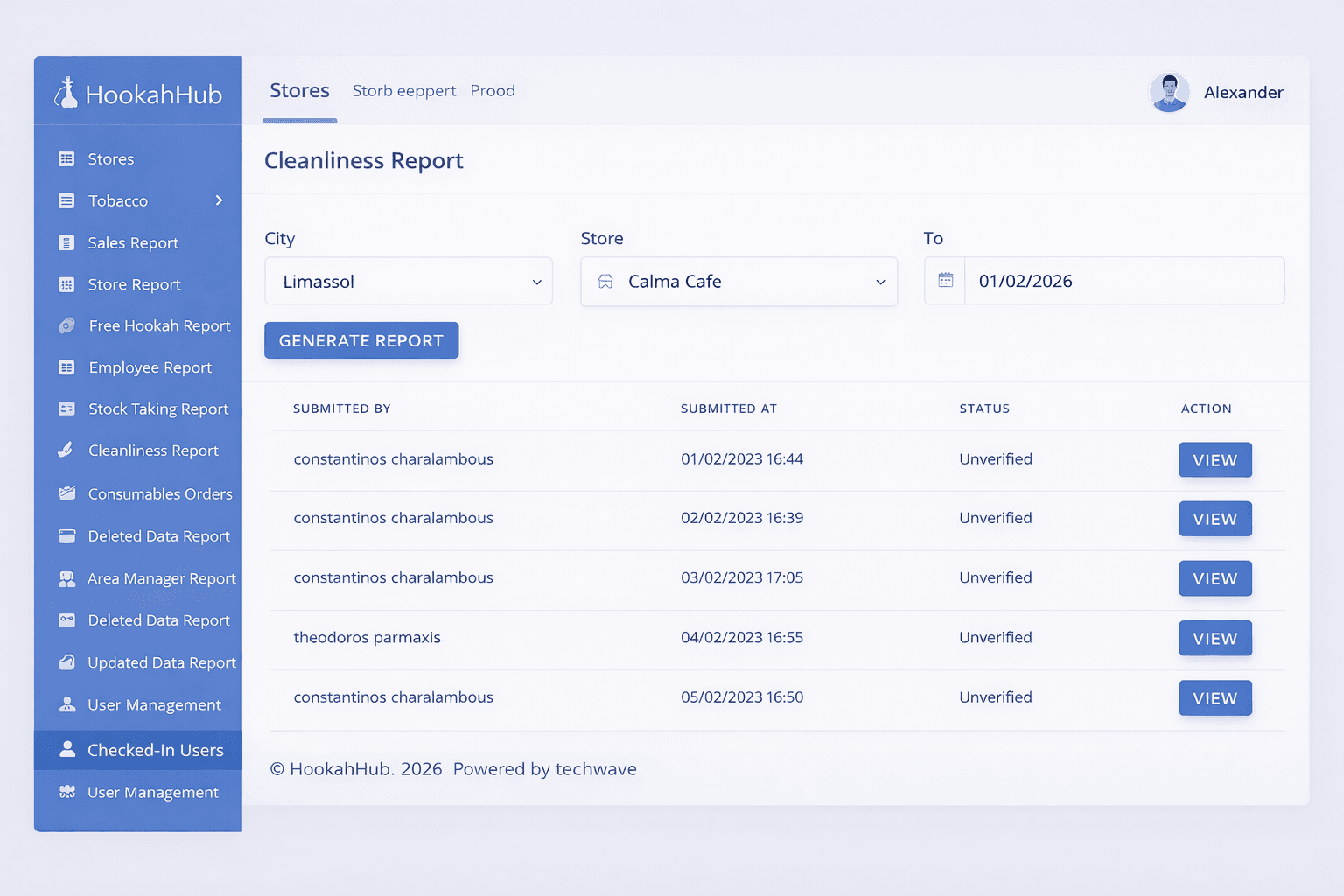
On manager login, the system shows a checklist popup that can be created and updated from the admin backend. This ensures supplies, equipment, and hygiene standards are verified before staff start the shift.
The checklist creates repeatable operational discipline across venues — and can also be audited later if needed.
- Admin-configurable checklists (editable without code changes)
- Manager-led readiness verification before staff attendance is allowed
- Supports quality oversight for remote venues at scale
3) Automated Payroll Engine
Every staff member is assigned a contract type at onboarding (hourly or daily). The payroll engine reads geo-validated attendance logs, calculates working time, and generates monthly salary outcomes automatically.
This removed repetitive manual work and reduced errors caused by spreadsheets and fragmented tracking.
- Contract-aware payroll (per-hour vs per-day)
- Monthly salary calculations generated from validated attendance logs
- Clear audit trail of attendance → hours → salary
4) Profit Sharing & Monthly Settlement Engine (3 Models)
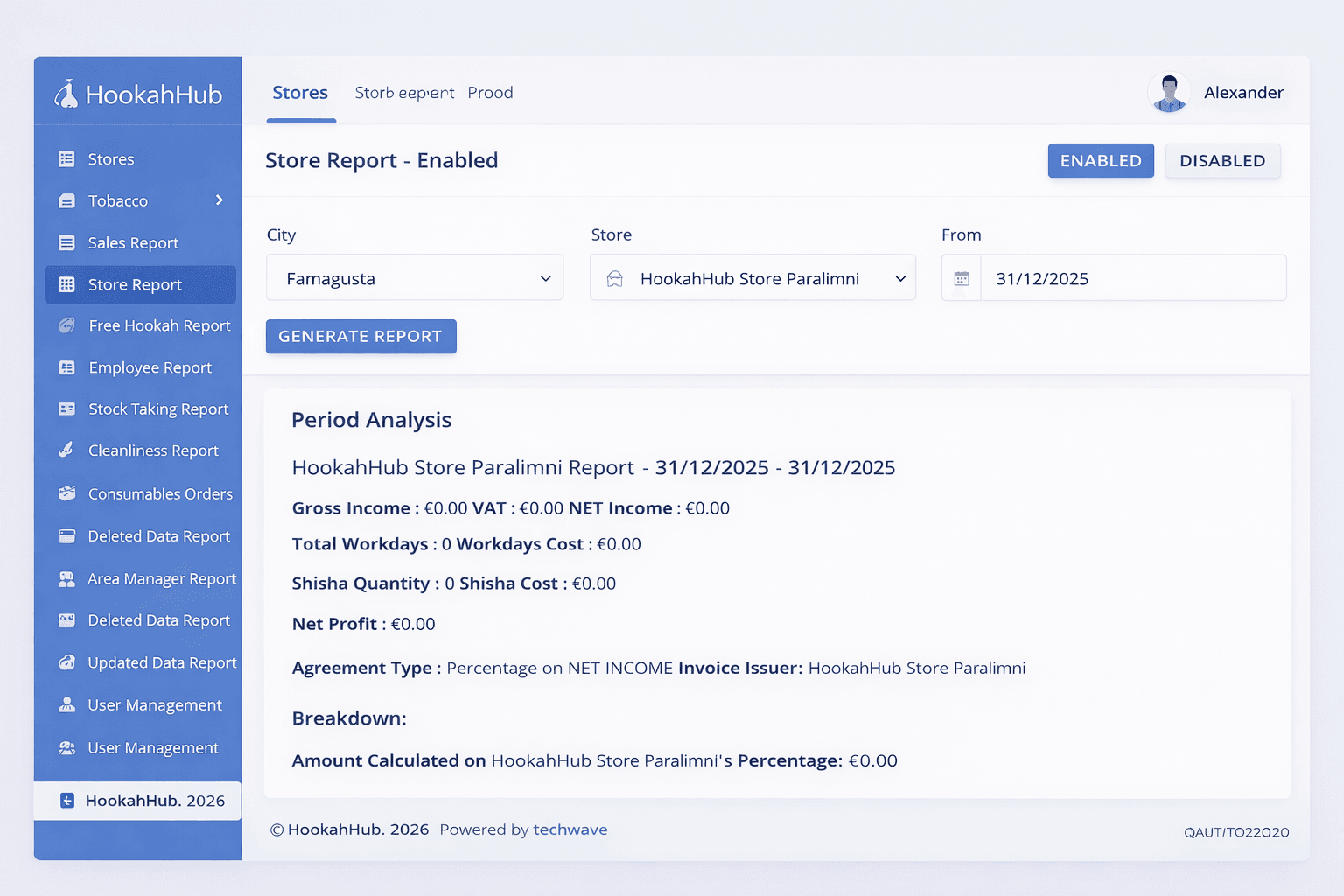
When a venue is added, the admin sets who pays which costs (venue vs provider) and configures the shisha profit-share agreement. The system supports three settlement models to match real-world contracts.
At month end, the engine calculates expenses, VAT, profit, and the split between the venue and the provider — generating a clear breakdown of what each party owes.
- Net profit share model
- Gross profit share model
- Tiered performance shares (higher sales → higher share)
- VAT and expense deduction included in settlement calculations
- Venue-by-venue contract configuration at onboarding
5) Live Ordering + Real-Time Inventory Deduction
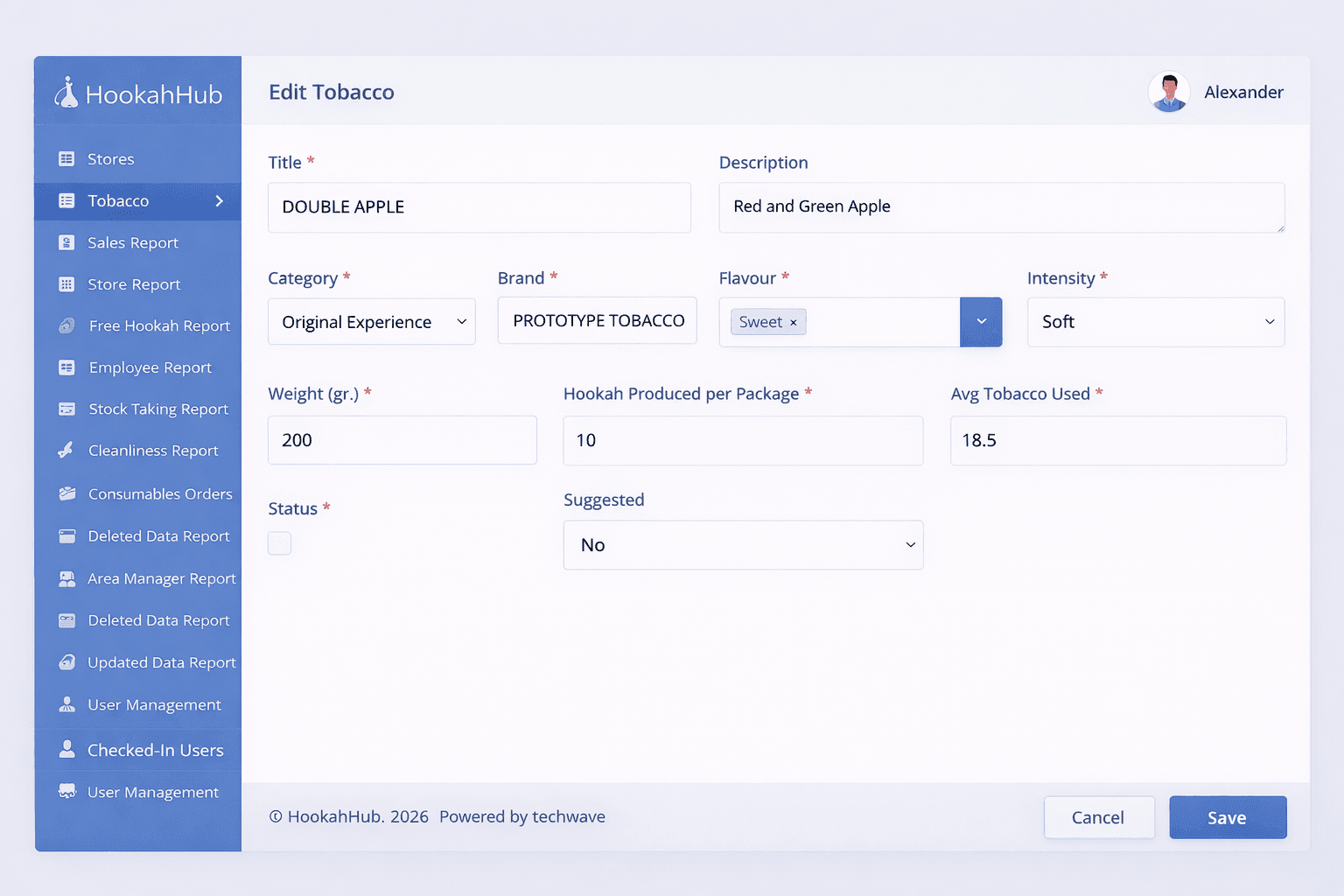
We built an ordering workflow for staff working at tables. Orders can include custom mixes and flavours, and each order deducts the appropriate quantities from backend inventory automatically.
Inventory supports consumables (e.g., tobacco/flavours) and non-consumables (e.g., billing devices/equipment), creating full accountability across venues.
- POS-like ordering from the venue floor (staff workflow)
- Custom mixes/flavours supported in order building
- Auto-deduction of ingredient quantities from inventory
- Consumables vs non-consumables tracked separately
Screens (Placeholder Images)
Reporting & Business Intelligence
The reporting layer was designed to be decision-grade. The system produces store-level, employee-level, regional and inventory reports that help leadership understand profitability and operational performance.
These insights are used to identify loss-making venues, enforce operational improvements, and renegotiate agreements based on real-time profitability data.
- Venue performance reports (profitability, expenses, trends)
- Employee attendance and payroll reports
- Inventory consumption reports (shrinkage and variance detection)
- Regional reporting to compare areas and clusters
Outcome: From Gut-Feeling to Data-Driven Negotiation
By combining validated attendance, automated payroll, structured settlement rules, and real-time inventory, the ERP changed operations from manual oversight to measurable control.
The client can now use reports to renegotiate venue contracts confidently, because profitability and performance are transparent and defensible.
- Reliable presence validation (geo-fence + oversight)
- Faster, consistent month-end payroll and settlements
- Reduced inventory loss through real-time tracking
- Clear reporting used to protect margins and improve contracts
Tech Highlights
Overview
Ready to Start Your Project?
Let’s discuss the best stack for your business